Le Creuset vs Lodge: Which Cast Iron Should You Buy?
French enameled heirloom or American bare-iron workhorse? We compare price, performance, care and lifespan to help you choose your cast iron.
In this article
Cast iron has been part of home cooking for centuries because it does something very few materials can: it holds heat, and holds it evenly. Two brands dominate the conversation. Le Creuset, from France, is famous for glossy enameled pots in glowing colors. Lodge, from Tennessee, is beloved for plain, affordable, pre-seasoned skillets that last for generations.
They are not really competitors. They make different types of cast iron for different purposes, and knowing which you need can save you hundreds.
Two brands, two traditions
Le Creuset was founded in 1925 in northern France, and its enameled cast iron, in particular its Dutch ovens, made the brand a symbol of serious home cooking. The enamel coating means there is no need for seasoning, and the pots come in a wide range of colors. Le Creuset covers its cookware with a limited lifetime warranty, and the range extends beyond cast iron to stoneware and stainless steel.
Lodge has been making cast iron in South Pittsburg, Tennessee since 1896. Its skillets, griddles and pans are made from bare cast iron that is pre-seasoned with oil at the factory, so you can cook straight away. Lodge also offers an enameled range at lower prices than premium European brands.
Head to head
| Le Creuset | Lodge | |
|---|---|---|
| Type | Enameled cast iron (Dutch ovens, casseroles, skillets) | Bare pre-seasoned cast iron, plus enameled range |
| Price tier | Premium, an investment | Budget to mid |
| Cooking surface | Smooth enamel, no seasoning required | Bare iron that improves with use |
| Care | Hand wash, avoid metal abrasives | Wash, dry, oil lightly; re-season occasionally |
| Acidic foods | Fine, with no reaction | Bare iron can react; enameled is fine |
| Looks | Colorful, table-ready | Rugged, utilitarian |
| Weight | Heavy | Heavy |
| Lifespan | Decades | Generations |
Cooking performance
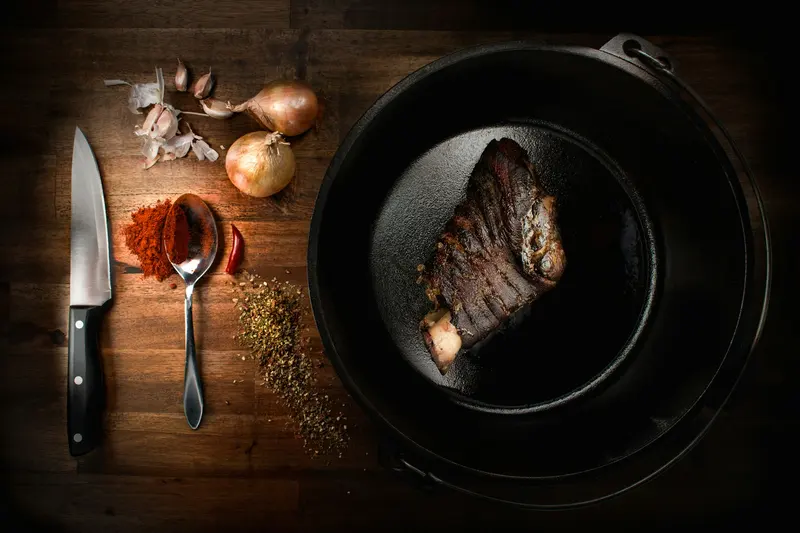
For searing steaks, baking cornbread and frying chicken, a bare Lodge skillet excels. The rough, seasoned surface builds an outstanding crust, and its price makes it easy to own two or three sizes. With time, a well-seasoned skillet becomes naturally slick and easier to use.
For slow braises, stews, soups and no-knead bread, a Dutch oven is a natural fit. Here, enameled cast iron is a delight: you can simmer tomato sauces or wine-based dishes without worrying about a metallic taste, you can clean it easily and it goes from stove to oven to table.
Care, in plain terms
Bare cast iron (Lodge skillets):
- Wash with hot water and a brush; a little mild soap is fine.
- Dry immediately and completely, ideally on a warm burner.
- Rub in a very thin layer of cooking oil while warm.
- Store in a dry place. If rust appears, scrub it off and re-season in the oven.
Enameled cast iron (Le Creuset and similar):
- Let it cool before washing to avoid thermal shock.
- Use nylon scrubbers, not metal scouring pads.
- Soak stuck-on food instead of scraping.
- Avoid overheating an empty pot, which can damage the enamel.
Are Le Creuset pots worth the money?
If you cook often and plan to keep a Dutch oven for decades, the premium can be justified. The finish is beautiful, the enamel is durable, and the brand's reputation and warranty support strong resale value. But performance differences from cheaper enameled cast iron are less dramatic than the price gap suggests. Many reviewers find that budget options from Lodge and other makers cook very similarly, with differences mostly in enamel finish, color range and lid fit.
Staub, another French brand, is a well-regarded alternative with a dark, matte interior that browns food impressively.
Buying tips
- Start with one skillet. A 10 or 12-inch Lodge skillet covers most needs.
- Add a 5 to 6-quart Dutch oven when you are ready to cook stews and bake bread.
- Check your stove. Cast iron works on gas, electric, induction and in the oven, but its weight can scratch glass tops if dragged.
- Look for sales, outlets and second-hand pieces. Cast iron lasts, so vintage pans are great finds. Our thrift and resale guide explains where to look.
- Consider weight and handling. These pans are heavy, so try lifting one in a store if you have wrist or strength concerns.
Who should buy what?
Buy Lodge if:
- You want a cheap, indestructible skillet for searing and baking.
- You do not mind a little seasoning routine.
- You like the idea of a pan that improves with use.
Buy Le Creuset if:
- You want a colorful, table-worthy Dutch oven.
- You cook acidic sauces and want no-fuss cleaning.
- You are buying something to keep for decades, or to hand down.
The bottom line
The smartest kitchen is not either-or. A Lodge skillet and a good enameled Dutch oven cover nearly every task. Save your money for the pieces you will use weekly, and let the rest of your kitchen stay simple.
Product lineups, prices and availability change often. Check current specs and retailer terms before you buy. See our editorial policy and affiliate disclosure.